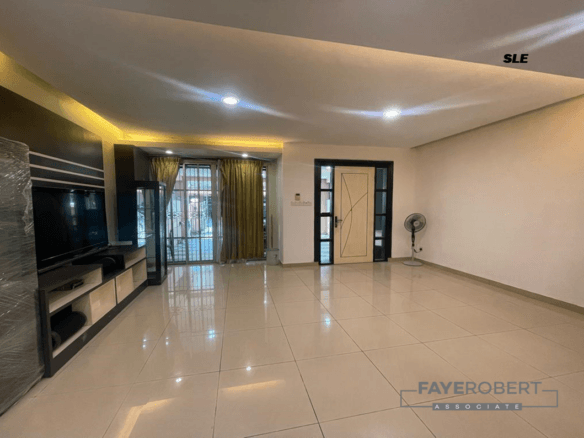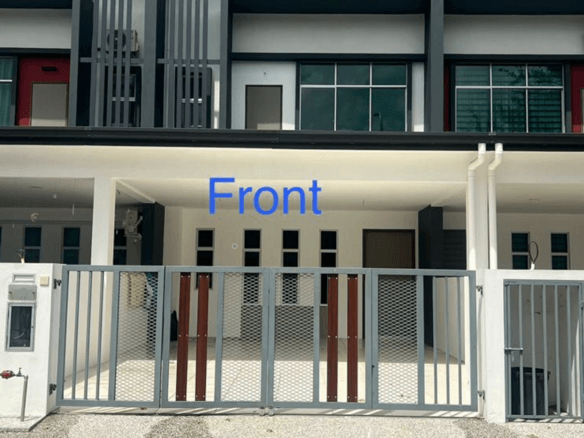

Property investment in Kota Kinabalu remains a credible option in 2026, but the market rewards careful selection rather than broad assumptions. Sabah entered the year with stronger economic and tourism indicators. At the same time, the latest property data also points to softer pricing, financing pressure,e and continued competition from unsold and incoming supply. The result is a market with genuine opportunities, but few shortcuts.
This article examines the investment climate for residential and selected commercial property. It considers transaction activity, rental demand, tourism, financing, ownership costs, taxation, location, property type, pe and exit risk. The central question is not whether every property in Kota Kinabalu will rise in value. It is whether a specific purchase can produce a sensible return under realistic conditions.
For most investors, successful property investment in Kota Kinabalu begins with three disciplines: paying a defensible price, identifying a clear tenant or future-buyer market, and calculating the return after all costs. A sea view, new facilities, or a persuasive sales projection may support demand, but none replaces evidence.
Property Investment in Kota Kinabalu: The 2026 Market Climate
The latest full-year figures provide a constructive starting point. The 2025 East Malaysia Region Property Market Report recorded 10,353 property transactions in Sabah during 2025, an increase of 4.1% from 2024. Transaction value slipped by 1.0% to about RM5.57 billion. This combination suggests that activity improved, but the average value represented by the transactions did not rise at the same pace.
Residential property also improved during 2025. Sabah recorded 5,678 residential transactions, up 4.6%, with transaction value increasing 4.5% to approximately RM2.38 billion. The average all-house price for Sabah was reported at RM537,799, 3.3% higher than in 2024. These state-level figures are a useful context for property investment in Kota Kinabalu. However, they should not be treated as a citywide forecast or a valuation for any individual development.
The First Quarter of 2026 Was More Cautious
The first-quarter data adds a note of restraint. According to the NAPIC Q1 2026 property market release, national transaction volume fell 8.0% from a year earlier to 89,966, while transaction value declined 0.6% to RM51.09 billion. The Malaysian House Price Index still rose nationally, but Sabah recorded a 2.3% annual contraction in the quarter.
That does not establish that prices in Kota Kinabalu fell by the same amount. The Sabah index covers a wider market, and results vary by property type and location. It does show why a 2026 investment analysis should use conservative assumptions. Property investment in Kota Kinabalu cannot be evaluated solely from the stronger full-year 2025 figures.
| Indicator | Latest official signal | Investment interpretation |
| Sabah market activity | 10,353 transactions in 2025, up 4.1%; value down 1.0% | More activity, but no evidence of uniform price acceleration |
| Sabah residential activity | 5,678 transactions in 2025, up 4.6%; value up 4.5% | Residential demand remained active, with results likely to vary by area and building |
| Sabah house prices | Average all-house price up 3.3% in 2025; state index down 2.3% year-on-year in Q1 2026 | The direction is mixed, supporting cautious purchase-price assumptions |
| National new supply | 9,112 new residential units launched in Q1 2026 with 11.5% sales performance | New projects face competition, and investors should test the developer’s projections |
| Financing setting | OPR maintained at 2.75% on 7 May 2026 | Borrowing costs remain material to cash-flow calculations |
Economic Factors Supporting the Investment Case
Kota Kinabalu Is Sabah’s Main Service and Administrative Centre
Kota Kinabalu concentrates state administration, healthcare, education, retail, hospitality, professional services, and regional business activity. That concentration creates several sources of housing demand rather than reliance on one industry. Long-term tenants may include local professionals, public-sector staff, employees transferred to Sabah, students, families,s and workers connected with tourism and related services.
This economic role most clearly supports property investment in Kota Kinabalu,u where the property is convenient for everyday life. Access to employment, schools, hospitals, shopping, transport routes, and parking often matters more to a long-term tenant than a long list of facilities. A unit that is easy to live in can compete through several market cycles.
Sabah’s Economy Strengthened in 2025
The Department of Statistics Malaysia’s 2025 state GDP release reported Sabah’s economy at approximately RM88.8 billion, with real growth of 5.1% in 2025. A stronger economy can support employment, business activity,y and household demand, but the relationship with property is indirect. Growth does not automatically translate into higher rents or faster resale for an overpriced unit.
Investors should look for the part of the economic story that connects to the proposed property. A family-sized home near schools and employment centres has a different demand base from a small furnished city unit. A shoplot depends on passing trade, visibility, and business occupancy. Property investment in Kota Kinabalu is stronger when the demand case is specific rather than based on the city’s general growth.
Tourism Adds Demand, but It Is Not a Guaranteed Rental Strategy
Sabah recorded 3,793,709 visitor arrivals in 2025, an increase of 20.5% from 2024, according to the Sabah Tourism Board’s 2025 visitor statistics. The recovery continued into 2026: January to April 2026 visitor arrivals reached 1,380,830, up 17.2% from the same period in 2025.
Those numbers support the wider hospitality economy and may benefit selected central, waterfront, airport-adjacent, and resort-oriented properties. They do not prove that a particular condominium will achieve high short-stay occupancy. Building rules, local requirements, cleaning, utilities, platform fees, seasonal demand, and operator quality can substantially reduce the headline income. For property investment in Kota Kinabalu, tourism should strengthen a case that already works, not rescue one that does not.
Factors That Could Limit Investment Returns
Financing Costs Can Turn a Gross Yield Into Weak Cash Flow
Bank Negara Malaysia maintained the Overnight Policy Rate at 2.75% on May 7, 2026. The OPR is not the rate offered on an individual mortgage, but it influences the broader borrowing environment. Loan margin, tenure, borrower profile, and bank pricing will determine the actual monthly payment.
A property producing a respectable gross yield can still lose money each month after interest, maintenance charges, sinking-fund contributions, insurance, assessments, repairs, vacancy, and agent or management fees. This situation is one of the most common weaknesses in property investment in Kota Kinabalu. In weak projections for property investment in Kota Kinabalu, the advertised rent is compared with the purchase price, while the remaining expense column is left for later.
New Supply Creates Competition
At the end of 2025, NAPIC reported 255,521 existing residential units in Sabah, 9,697 units of incoming supply, and 4,464 units of planned supply. These are statewide figures, but they show that investors must examine the pipeline around the chosen location. New completions can improve an area, yet they can also place many similar units on the rental and resale market at the same time.
The national Q1 2026 data also showed 32,801 completed residential units remaining unsold, together with 19,263 completed unsold serviced apartments. Those figures are not specific to Sabah, so they should not be applied directly to Kota Kinabalu. They do show that newness alone is not a sufficient investment thesis. Anyone considering property investment in Kota Kinabalu should ask how many comparable units will compete for the same tenant or purchaser.
Building Management Can Matter More Than the Address
Condominium returns depend on the condition and financial health of the entire building. Persistent lift failures, water intrusion, weak security, insufficient parking, or neglected common areas can reduce rent and lengthen resale time. A low maintenance charge is not necessarily positive if it leaves the management corporation unable to fund essential work.
Before completing a property investment in Kota Kinabalu, an investor should review the available maintenance statements, sinking fund information, meeting minutes, outstanding arrears, insurance policies, planned repairs, and special levies. The strongest location cannot fully compensate for a building that is deteriorating or poorly governed.
Liquidity Is Uneven
Kota Kinabalu is a significant regional market, but it is smaller than Kuala Lumpur, Johor Bahru, or Penang. Certain luxury units, oversized apartments,s and specialised commercial properties may attract a narrower group of buyers. An investor may eventually achieve the desired price, yet the selling period can be long.
Exit risk should be considered before purchase. Ask who would buy the property later, what alternatives they would have, and how the unit would compare without developer incentives or optimistic marketing. A property that appeals only to another investor may be more vulnerable when sentiment weakens.
Which Property Types Offer Investment Potential?
Condominiums and Apartments
Condominiums are a common entry point for property investment in Kota Kinabalu because they offer security, shared facilities, and locations close to urban services. They can suit professionals, couples, small families, expatriates,s and occasional-use buyers. The investment case is usually strongest when the unit size, parking, and monthly charges match the likely tenant market.
The main risk is competition from near-identical units. When several owners in the same development are advertising similar layouts, rent becomes easy to compare and harder to defend. Investors should examine actual leased units, the amount of vacant stock,k, and the frequency of owner discounting rather than relying on the highest advertised rent.
Landed Residential Property
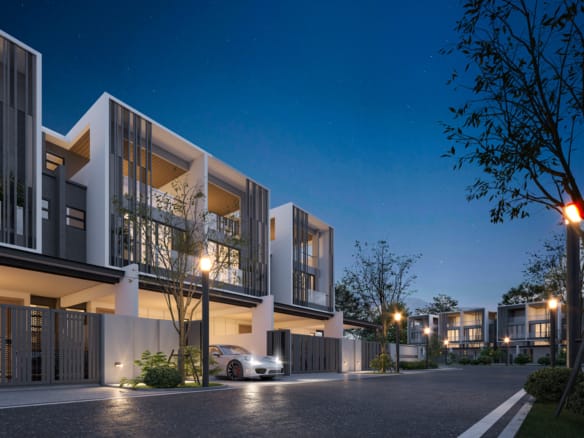
Landed homes can attract families who value space, privacy,cy, and parking. A good property in an established neighbourhood may retain a stable tenant base and appeal to future owner-occupiers. The trade-off is usually a higher purchase price, greater direct maintenance responsibility, and a gross yield that may be lower than that of a smaller apartment.
For landed property investment in Kota Kinabalu, investors should assess drainage, road access, security, roof and exterior condition, renovation history, and the practical travel time to schools and employment. Larger homes can yield more dependable tenancies, but vacancies may be costly, and the tenant pool may be narrower.
New-Launch Property
A new launch may offer staged payments, newer specifications, defect-liability protection,n and a choice of units. It also requires the investor to make assumptions about the completed building, future management, surrounding construction, and rental competition. Incentives can reduce the effective entry cost, but they should be separated from the stated selling price when comparing alternatives.
The full comparison of the new launch versus the subsale property in Kota Kinabalu explains why neither option is automatically superior. For property investment in Kota Kinabalu, the key difference lies in the evidence. A subsale building provides an operating history, while a new launch offers a future proposition.
Subsale Property
A completed property allows the buyer to inspect the exact unit, test noise and access, review the common areas, and investigate current rents. Immediate rental income may be possible after completion of the transaction and any renovation. The investor can also compare the asking price with actual transactions in the same development.
Subsale property may require repairs, furnishing,g and upgrades. Older buildings can face large capital works. The right comparison is therefore not new versus old, but total acquisition cost versus verified earning potential.
Shoplots, Offices, and Other Commercial Property
Commercial property can offer longer leases and different return characteristics, but it requires a deeper understanding of business demand. Visibility, parking, loading, access, surrounding occupancy, and the tenant’s ability to trade are central. Fit-out periods and vacancy can be longer than in the residential market.
Investors should be cautious about treating a shoplot or office as a passive alternative to housing. A good commercial purchase requires a location-specific tenant strategy and sufficient reserves to carry the property between leases.
Rental Demand and Realistic Yield Calculations
Long-Term Rental Demand
Long-term rental demand is generally linked to work, family needs, education, health care,e and access. Properties near the city centre, established residential areas, hospitals, schools, and major road connections may appeal to different tenant groups. Furnishing level, parking, and reliable building management often influence the final choice.
A long-term strategy can reduce turnover and operational workload, but landlords still need to allow for vacancies, repairs, agent fees, and tenant incentives. For property investment in Kota Kinabalu, the most useful rent evidence comes from recently signed tenancies in the same building or in a genuinely comparable property, rather than a broad online search across the city.
Short-Term Accommodation
Short stays may suit some central and visitor-oriented developments, but the business is active rather than passive. Management rules, permitted use, access control, and local requirements must be confirmed. Cleaning, linen, guest support, utility consumption, platform fee,s and furniture replacement can absorb a substantial share of revenue.
The investor should calculate short-stay performance using realistic occupancy and nightly rates across the full year. A projection based on a peak holiday period can create a misleading return. It is also prudent to model a long-term rental alternative in case operating rules or market conditions change.
Gross Yield and Net Yield Are Different Measures
Gross rental yield is commonly calculated by dividing annual rent by the purchase price. It is useful for a first comparison, but it ignores acquisition costs and operating expenses. Net yield deducts recurring costs and should also reflect vacancy, repairs, rs and management. Leveraged cash flow then includes financing.
For example, a unit rented at RM2,500 per month produces RM30,000 in annual gross rent. If the total capital committed is RM600,000, the gross yield is 5.0%. After two months of vacancy, maintenance, sinking fund, insurance, assessment, repair, IRS, and agent fees, the net result can be materially lower. Property investment in Kota Kinabalu should be judged on the net figure and on cash flow after debt service.
Locations Investors Commonly Compare
City Centre and Waterfront
Central and waterfront locations offer proximity to business, shopping, restaurants, transport links, and visitor activity. They may suit professionals, expatriates, second-home buyers,s and selected short-stay strategies. Prime positioning can also support resale interest from buyers who value walkability.
The risks are premium pricing, traffic, parking, high service charges, and competition among similar units. Investors should examine the building’s actual residential character, visitor policies, and long-term management record rather than assuming every waterfront address has the same demand.
Tanjung Aru and Sutera Harbour
These areas can appeal to lifestyle buyers because of airport access, coastal amenities,s and resort surroundings. The tenant or purchaser may place a premium on environment and convenience. The investment return still depends on entry price, maintenance charges, and the scarcity of comparable units.
Likas, Luyang, Damai, and Kepayan
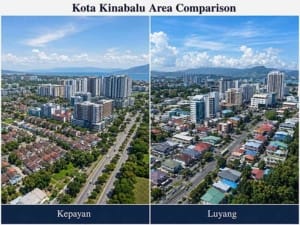
Established residential areas may offer a broader long-term demand base. Access to schools, healthcare, shopping, employment,nt and the city centre can make them practical for families and local professionals. Older buildings need careful inspection, but a well-managed development can compete effectively without relying on tourist demand.
Inanam, Menggatal, and Greater Kota Kinabalu Growth Areas
Outer areas may provide more space or a lower entry price. They can suit tenants whose work and family routines are nearby. Investors should test peak-hour travel, future road and surrounding development, retail access, and the depth of the resale market. A lower purchase price is valuable only when rental and exit demand remain sufficient.
A more detailed location comparison is available in the guide to the best areas to buy a condo in Kota Kinabalu. For property investment in Kota Kinabalu, location research should then be narrowed to specific buildings and units.
Costs and Taxes That Affect the Investment Case
The purchase price is only one part of the capital required. Investors may need to budget for legal fees, stamp duties, valuation, loan documentation, deposits, renovation, furnishing, utility connection,s and an initial vacancy period. For property investment in Kota Kinabalu, the correct total is the amount required to make the property ready and keep it operating.
Recurring costs may include maintenance charges, sinking fund contributions, assessment rates, quit rent (where applicable), insurance, repairs, appliance replacement, utilities during vacancy, and property management. Commercial property can add fit-out contributions and longer vacancy periods. These costs should be included before comparing property investment in Kota Kinabalu with other investments.
Real Property Gains Tax
Malaysia imposes Real Property Gains Tax on chargeable gains from the disposal of Malaysian real property. The current RPGT rates differ by disposer category and holding period. The rate position for a Malaysian individual is different from that of a company or a non-citizen who is not a permanent resident.
Since January 1, 2025, submitting CKHT returns through MyTax has been mandatory. Tax rules can change, and allowable costs or exemptions depend on the facts. Investors should obtain tax advice before purchasing and again before disposal.
Considerations for Foreign Investors
Foreign buyers must consider state approval, minimum purchase requirements, title restrictions, financing, taxation, and the property’s permitted use. These matters may vary by property type and personal circumstances. Eligibility to buy should be confirmed before a deposit or reservation creates financial exposure.
The separate guide to foreign buyer property rules in Sabah covers the ownership framework in more detail. For property investment in Kota Kinabalu, foreign buyers should also consider currency movements, cross-border transfer costs, remote management, and the size of the future buyer market.
Property investment in Kota Kinabalu can offer personal-use value as well as income, particularly for a buyer who spends part of the year in Sabah. Personal enjoyment should still be separated from financial return. A property can be a satisfying purchase without being the strongest pure investment.
Due Diligence Before Buying an Investment Property
Confirm the Title and Legal Property Details
The buyer’s lawyer should confirm ownership, title type, tenure, restrictions in interest, registered area, parking rights, land use, and any encumbrances. The physical property should match the legal documents. The Sabah Lands and Surveys Department provides official title and property-search services through its systems.
Review the Building’s Financial Position
For strata property, request the available maintenance accounts, sinking fund records, meeting minutes, insurance information, arrears data, and notices of planned work. Ask whether special levies have been discussed. In property investment in Kota Kinabalu, a well-presented unit can conceal expensive building-wide problems.
Verify Rental Evidence
Ask for evidence of current or recent tenancies, including the leased amount, duration, furnishings, and any incentives. Compare several units of the same size. A single high asking rent should not anchor the projection. Investors should also ask how long comparable units remain vacant between tenants.
Investigate Planning and Nearby Development
Future development may add roads, services,s and demand, or it may obstruct a view and create competing supply. The Kota Kinabalu 2035 plan and other DBKK planning materials provide useful background, but a buyer should also make property-specific enquiries about nearby land and approved works.
Plan the Exit
A purchase decision should include a probable holding period and exit audience. Consider whether the likely future buyer will be an owner-occupier, an investor, a foreign purchaser, or a business. Estimate selling costs and a realistic marketing period. A conservative exit plan is a core part of property investment in Kota Kinabalu.
Building a Conservative Investment Projection
A useful projection should contain at least three cases. The base case uses achievable rents, normal vacancy rates, known ownership costs, and modest price assumptions. The downside case includes lower rent, longer vacancy periods, unexpected repairs, higher financing costs, and a slower sale. The upside case may include stronger occupancy or price growth, but it should not be required for the investment to remain manageable.
Investors should calculate the cash required at purchase, the annual net operating income, the debt service, the tax exposure, and the likely proceeds after selling costs. They should also identify the break-even rent and the number of vacant months the property can absorb. Property investment in Kota Kinabalu becomes considerably safer when the downside can be carried without forced sale.
The projection should be updated when new facts appear. A revised maintenance charge, a lower bank valuation, or an unexpected renovation requirement can change the result before completion. Walking away from a weak transaction is sometimes the best return available.
The 2026 Outlook for Kota Kinabalu Property Investors
The 2026 outlook is balanced. Sabah entered the year with improved 2025 transaction volume, stronger state economic growth, and a substantial rise in visitor arrivals. Kota Kinabalu retains its role as the state’s administrative, service,e and tourism centre. These factors support continuing demand for well-located, functional property.
The counterweight is equally important. The first quarter of 2026 showed softer national transaction activity and a decline in the Sabah house price index. Financing remains a meaningful cost. New and unsold supply can put pressure on rents and resale values. Building management and liquidity vary sharply.
For those reasons, property investment in Kota Kinabalu in 2026 appears more favourable for patient investors than for short-term speculators. The strongest opportunities are likely to be properties bought at a reasonable all-in cost, with a clear tenant or owner-occupier market and a return that remains acceptable after vacancy and maintenance.
Frequently Asked Questions About Property Investment in Kota Kinabalu
Is Kota Kinabalu a Good Place to Invest in Property in 2026?
It can be, provided the purchase is selected carefully. The city benefits from its role as Sabah’s main administrative and service centre, while tourism and the state economy improved during 2025. The latest 2026 data also signals caution. A good investment depends on price, location, tenant demand, building quality, and total cost rather than the city name alone.
What Type of Property Is Best for an Investor?
There is no universal answer. Condominiums can be easier to manage and may suit urban tenants. Landed homes may attract families but require more capital and maintenance. Commercial property can offer longer leases but carries greater vacancy and tenant-business risk. The best choice is the one with a verified demand base and a return that matches the investor’s resources.
What Rental Yield Should an Investor Expect?
A citywide yield estimate can be misleading because rents, prices, and costs vary widely. Investors should calculate the gross and net yields for the specific unit. Recently signed rents, realistic vacancy, maintenance, repairs, management, and financing should all be included. A lower but dependable net yield may be more valuable than a high projection based on perfect occupancy.
Is a New Launch Better Than a Subsale Property?
A new launch may offer modern specifications and staged payments, but the investor is relying on future conditions. A subsale property provides evidence of management, occupancy, and achieved rent, though it may need renovation. The better choice depends on the effective purchase cost and the quality of the available evidence.
Can Foreigners Invest in Kota Kinabalu Property?
Foreigners may purchase eligible property subject to Sabah’s current rules, minimum thresholds, approval,s and title restrictions. The requirements should be confirmed for the specific transaction. Foreign investors also need to consider financing, currency exposure, remote management,nt and the future resale audience.
Is Short-Term Rental a Reliable Investment Strategy?
It can work in selected properties, but it is an operating business rather than guaranteed passive income. Building rules, permitted use, seasonality, platform fees, cleaning, and guest management materially affect returns. For property investment in Kota Kinabalu, a long-term rental fallback should be tested before purchase.
What Is the Biggest Risk in the Kota Kinabalu Market?
Overpaying for a property based on optimistic rent or appreciation is one of the largest risks. Other concerns include weak building management, competing supply, financing costs, poor liquidity, and unexpected repairs. Most can be reduced through due diligence and conservative projections, although they cannot be removed entirely.
How Much Cash Reserve Should an Investor Keep?
The appropriate reserve depends on the property, loan,n and tenant strategy. It should be sufficient to cover several months of debt service and ownership costs, together with a realistic repair allowance. Strata investors should also consider the possibility of a special levy. A reserve that prevents forced decisions is part of sound property investment in Kota Kinabalu.
How Faye Robert Can Assist Property Investors
Faye Robert can help investors compare Kota Kinabalu areas, developments, and available properties, arrange viewings, and gather practical information about listings. She can also assist with communication among owners, developers, agents, lawyers, rs, and other transaction parties.
Investors can begin by reviewing the Kota Kinabalu property search and narrowing the options by budget, intended tenant, and preferred location. Legal, tax, lending,g and valuation advice should be obtained from the appropriate qualified professionals.
Conclusion: Is Property Investment in Kota Kinabalu Worth Considering in 2026?
Property investment in Kota Kinabalu is worth considering in 2026, but opportunities are selective. The economic and tourism background is supportive, and Sabah recorded improved transaction activity in 2025. The first-quarter 2026 figures, financing costs, and supply conditions argue against assuming rapid appreciation or effortless rental income.
A strong purchase combines a defensible price, a practical location, reliable management, a clear tenant or future buyer market, and sufficient financial reserves. When those elements are present, Kota Kinabalu property can provide income, long-term ownership value, or both. When they are absent, attractive marketing is unlikely to fill the gap.
Disclaimer
This article was prepared using information current at the time of writing in 2026. Property data, prices, rents, financing terms, tax rates, ownership requirements, planning proposals,s and regulations can change. Market statistics do not predict the performance of an individual property. Readers should verify current information with the relevant authorities and obtain independent legal, financial, tax, and valuation advice before making an investment decision.